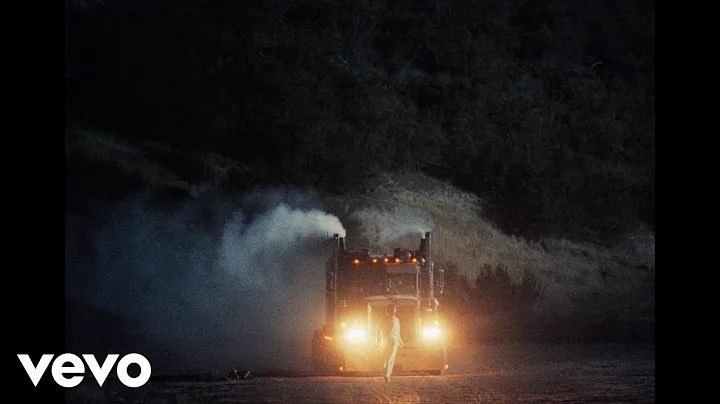
The Sound
The opening of "Untouchable" hits you with a piano loop that feels like it's been pulled from a noir film score — dark, sparse, and haunting. It's a single chord progression that repeats with a slight detuning every few bars, giving it an organic, almost decaying quality. The 808s don't crash in; they creep. A low, rumbling sub-bass that vibrates through the floor, followed by a snare that cracks like a whip. This is not maximalist trap. This is restraint as a superpower.
YoungBoy's voice enters not with a hook, but with a sigh. He's not rapping — he's conversing with the beat. His delivery is a whispered growl, full of gravel and pain. The production here is built around that vocal vulnerability. The beat never overpowers him. Instead, it leaves space for every crack in his voice, every ad-lib, every moment of silence. The result is a track that feels less like a song and more like a confession recorded in a basement at 3 AM.
The sonic palette is intentionally lo-fi. There's a slight tape hiss in the background, the kind you'd hear on a vintage cassette. The hi-hats are crisp but not polished, and the occasional vocal double-track adds a ghostly layer. It's a sound that's become synonymous with YoungBoy's brand: raw, unadulterated, and emotionally direct. No auto-tune excess, no glossy pop sheen. Just a man and his pain over a beat that breathes.
Deep Dive
What makes "Untouchable" work is its structural simplicity. The song follows a classic trap format — verse, chorus, verse, chorus, bridge, chorus — but the execution is anything but formulaic. YoungBoy's verses are dense with internal rhyme schemes and conversational phrasing. He doesn't just rap about his struggles; he narrates them in real time, as if the microphone is a therapist. Lines about legal battles, broken relationships, and paranoia land with the weight of lived experience.
The arrangement is masterfully minimal. The producer leaves the piano loop running throughout, but the energy shifts dynamically. In the verses, the kick drum is softer, almost a thud. The chorus brings a harder snare and a doubled vocal track, creating a sense of urgency. The bridge strips everything back to just the piano and a single vocal, forcing you to sit with the raw emotion. It's a classic tension-and-release technique, but executed with a subtlety that many trap producers miss.
Vocal production is key here. YoungBoy's voice is recorded with a close-mic technique that captures every breath and lip smack. There's no heavy compression; instead, the mix lets his natural dynamics shine. The ad-libs — "yeah," "on God," "no cap" — are placed not as fillers but as punctuation marks, emphasizing key lines. The harmonies in the chorus are layered but not stacked, creating a choir effect that feels intimate rather than anthemic.
Lyrically, "Untouchable" is a study in duality. YoungBoy oscillates between bravado — "I'm untouchable, can't nobody stop me" — and vulnerability — "But I'm still hurting, nobody know my pain." This push-and-pull is what makes the track resonate. It's not a simple flex track. It's a complex portrait of a man who feels invincible and invisible at the same time. The bridge, where he repeats "I'm just tryna find my way," is the emotional core, stripped of all pretense.
Industry Context
NBA YoungBoy's career is a case study in the power of independent distribution in the streaming era. Despite being signed to Atlantic Records, he operates like an independent artist. He drops music at a relentless pace — multiple albums and mixtapes per year — without the typical marketing build-up. "Untouchable" was released with zero promotion: no billboards, no radio singles, no Instagram teasers. It simply appeared on YouTube and exploded.
The numbers tell the story. Within 24 hours, the video had millions of views. On Spotify, it debuted in the top 10 of the US chart. This is the YoungBoy effect: his fanbase is so loyal and engaged that they will find his music regardless of algorithmic push. He doesn't need playlists; his fans create their own. His streaming numbers are consistently in the billions, yet he rarely appears on mainstream radio. He's built a parallel ecosystem that operates outside traditional gatekeepers.
What's remarkable is his YouTube strategy. YoungBoy's channel is a content machine — music videos, vlogs, freestyles, behind-the-scenes clips. He treats YouTube not as a promotional tool but as a primary distribution platform. His videos often have higher view counts than his Spotify streams, a rarity for most artists. This direct-to-fan model allows him to bypass the label's marketing machinery and maintain creative control.
From a business perspective, YoungBoy's approach is a blueprint for mid-tier artists. He prioritizes volume over polish, consistency over hype. He understands that in the attention economy, frequency is currency. By releasing constantly, he stays top-of-mind for his audience. His label Atlantic has learned to get out of the way, letting him operate on his own terms. The result is a career that's both commercially successful and artistically uncompromised.
Cultural Impact
"Untouchable" is more than a song; it's a cultural artifact of the post-2020 hip-hop landscape. YoungBoy represents a shift away from the polished, radio-friendly trap of the late 2010s toward something rawer and more regional. His sound is deeply rooted in Baton Rouge, Louisiana — a scene that's historically been overshadowed by Atlanta and Houston. He's brought that Southern grit to a national audience, proving that authenticity trumps polish.
The song's themes of legal trouble, mental health, and survival resonate deeply with Gen Z listeners who are navigating their own anxieties. YoungBoy's openness about his struggles — he's been open about his legal battles, his relationships, his mental health — makes him a relatable figure. He's not a distant superstar; he's a flawed human being making music in real time. This vulnerability has created a fiercely loyal fanbase that treats his releases as events.
On TikTok, "Untouchable" has spawned countless reaction videos, dance challenges, and lyrical breakdowns. But unlike many viral hits, it hasn't been reduced to a meme. The emotional weight of the song prevents it from being trivialized. Instead, fans use it as a soundtrack for personal storytelling — videos about overcoming adversity, dealing with heartbreak, or simply surviving another day. It's become an anthem for resilience.
Critically, YoungBoy remains polarizing. Some dismiss him as repetitive or one-dimensional, but that misses the point. His music isn't designed for critical acclaim; it's designed for connection. He's not chasing Grammy nominations or Pitchfork reviews. He's building a world where his fans feel seen. In an era where music is increasingly commodified, that's a radical act.
For Music Creators
There's a lot to learn from "Untouchable" and YoungBoy's broader approach. First, don't overthink your production. The track's minimal arrangement proves that a simple piano loop and a hard 808 can carry an entire song if the emotion is there. Focus on the vocal performance — that's where the magic lives. Spend more time on delivery and lyrical authenticity than on complex sound design.
Second, embrace volume. YoungBoy's strategy of releasing frequently — sometimes multiple songs a week — keeps his audience engaged. You don't need to wait for perfection. Release demos, freestyles, rough cuts. Let your fans see your process. The more you release, the more data you get about what resonates. Treat every drop as an experiment.
Third, build a direct relationship with your audience. YoungBoy doesn't rely on playlists or radio. He uses YouTube as his home base, engaging with fans through comments, live streams, and social media. Respond to messages, share behind-the-scenes content, make your fans feel like insiders. The loyalty he's built is earned, not bought.
Finally, own your narrative. "Untouchable" works because it's honest. YoungBoy doesn't pretend to be something he's not. Write about your real life — your struggles, your wins, your confusion. Authenticity is the most undervalued currency in music. In a world of curated personas, raw honesty cuts through the noise.
Verdict
"Untouchable" is not a revolutionary track in terms of musical innovation, but it's a masterclass in emotional resonance and strategic execution. It works because it's true — true to YoungBoy's sound, true to his story, true to his audience. In a landscape dominated by algorithm-driven hits, this song feels human.
Will it last? Probably not as a timeless classic, but that's not the point. It's a snapshot of a moment, a feeling, a movement. For creators, it's a reminder that you don't need a big budget or a major label to move people. You just need a beat, a microphone, and something real to say. YoungBoy Never Broke Again didn't break the mold with "Untouchable" — he just proved that the mold was never the point.