The Sound
You hear it before you see it. That piano—a single, repeated figure, dampened and close-miked, as if recorded in a small, empty room. The sustain pedal is held just long enough to let the notes bleed into each other, creating a wash of melancholy. Then the voice enters: a falsetto so fragile it sounds like it might break. Omar Apollo’s “Evergreen (You Didn’t Deserve Me At All)” opens with a confession, not a performance. The production here is built around a haunting piano loop that never lets up, a sonic anchor that keeps the listener locked in a state of emotional suspension.
The track lives in a liminal space between indie folk and contemporary R&B, but it doesn’t wear those influences on its sleeve. Instead, it borrows the intimacy of a singer-songwriter ballad and marries it to the vocal acrobatics of modern alt-R&B. There are no drum machines, no bass drops, no beat switches. Just piano, voice, and a subtle bed of strings that creep in around the second verse. The palette is deliberately sparse—every sound has weight. The silence between phrases is as important as the notes themselves. This is music that trusts the listener to fill in the gaps.
What makes this sound so arresting is its refusal to conform to streaming-era production norms. There’s no loudness war here. The dynamic range is wide; the verses are whisper-quiet, the choruses barely louder. Apollo’s voice cracks, strains, and soars, but it never feels polished. The production embraces imperfection as a feature, not a bug. In a landscape where so much music is compressed into a wall of sound, “Evergreen” dares to be quiet. And that quietness is precisely what makes it loud.
Deep Dive
Let’s get into the bones of this arrangement. The song is in A minor, a key that inherently carries a sense of longing. The piano plays a four-chord progression—Am, F, C, G—but it’s the voicing that matters. Apollo plays the chords in close position, mostly in the middle register, which gives the track a bedroom-recorded intimacy. The left hand is minimal: roots and fifths, no fancy inversions. The right hand carries the melody, but it’s the ghost notes—the slight delays between chord changes, the uneven timing—that make it feel human.
The vocal performance is the centerpiece. Apollo uses a technique common in indie R&B: the verse is delivered in a breathy, head-voice falsetto, while the chorus opens up into a fuller chest voice. But he doesn’t just switch registers; he plays with dynamics within each line. The phrase “You didn’t deserve me at all” is sung with a crescendo on “all,” as if he’s convincing himself as much as the listener. The vocal production uses subtle layering—a double track on the chorus, a third harmony on the final repetition—but it’s never obvious. The harmonies are tuned to be slightly imperfect, creating a natural chorus effect that feels like multiple versions of the same voice.
Structurally, the song subverts expectations. There’s no traditional bridge. Instead, the second chorus leads into a breakdown where the piano drops out for two bars, leaving only Apollo’s voice and a single sustained violin note. This is the genius of the arrangement: by removing the piano at the peak of emotional intensity, the producer forces the listener to lean in. The silence becomes a hook. When the piano returns, it hits harder because we missed it. That’s advanced arrangement thinking—using negative space to amplify impact.
The string arrangement, credited to an uncredited session musician, is worth analyzing. It’s not a typical Hollywood orchestral swell. The strings are recorded dry, with no reverb, and they play long, droning notes that create a dissonant tension against the piano’s major chords. At 2:34, a cello line descends chromatically under the vocal, hinting at the harmonic minor scale. It’s a small detail, but it adds a layer of unease that keeps the listener from ever feeling fully comfortable. Comfortable doesn’t sell heartbreak.
Industry Context
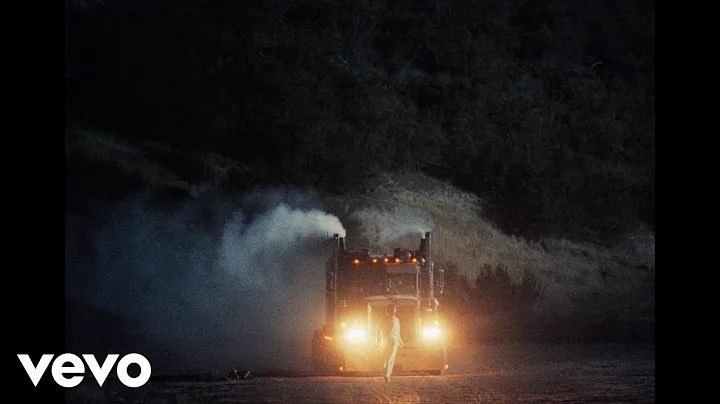
“Evergreen” was released as a single in 2022 on Warner Records, but its trajectory is anything but typical major-label fare. The song didn’t debut on the Billboard Hot 100; it climbed slowly, powered by TikTok sounds and Spotify playlist placement. As of early 2025, it has over 300 million streams on Spotify alone, and its music video—directed by Omar Apollo himself—has accumulated 50 million YouTube views. Those numbers put it in the upper echelon of indie-adjacent R&B hits, alongside artists like Steve Lacy and Frank Ocean.
What’s fascinating is the marketing strategy. Warner didn’t push the song with traditional radio campaigns. Instead, they leaned into organic virality. Apollo released a stripped-down live version on YouTube, a piano-only demo on SoundCloud, and a series of short films on Instagram that expanded the song’s narrative universe. This multi-platform approach allowed the song to find its audience without feeling manufactured. The label understood that the song’s strength was its authenticity, so they let the song breathe.
The business lesson here is about patience. “Evergreen” didn’t go viral overnight. It took six months of steady playlist growth, user-generated content, and critical buzz before it broke into the mainstream. In an industry obsessed with first-week numbers, Apollo’s team played the long game. They focused on building a community around the song, not just a spike in streams. That’s a strategy independent artists can replicate: release early, iterate, and let the audience catch up.
Cultural Impact
“Evergreen” arrived at a moment when indie R&B was already ascendant, but it carved out a specific niche. While artists like SZA and Summer Walker were dominating with maximalist production and confessional lyrics, Apollo offered a quieter, more introspective alternative. The song became an anthem for a certain kind of heartbreak—the kind that isn’t dramatic or explosive, but quiet and lingering. TikTok users latched onto the line “You didn’t deserve me at all” as a caption for videos about moving on, self-worth, and emotional closure. The song’s simplicity made it endlessly remixable, spawning acoustic covers, piano tutorials, and sped-up versions.
Critically, the song was praised for its restraint. Pitchfork called it “a masterclass in emotional economy,” while Rolling Stone highlighted its “cinematic minimalism.” But the real cultural impact is in how it shifted expectations for what an R&B ballad can be. It proved that you don’t need a beat drop or a featured artist to make a hit—you just need a melody that sticks and a vocal performance that feels real. That’s a lesson that has rippled through the genre. Listen to recent tracks by artists like Fousheé, Mk.gee, or even Taylor Swift’s folk-pop pivot, and you can hear the DNA of “Evergreen.”
For Music Creators
What can you steal from this track? First, the arrangement philosophy: start with one instrument and build outward. Producers should experiment with stripping a song down to its bare essentials—piano or guitar and voice—and only add elements that serve the emotional arc. If you can’t make a song work with just two tracks, adding more won’t fix it. The vocal layering techniques used here are replicable in any DAW: record a double track slightly out of time, pitch-shift it by a few cents, and blend it at low volume. That’s the secret to the “imperfect” chorus sound.
Second, study the dynamic mapping. In most pop songs, the chorus is louder than the verse. In “Evergreen,” the volume difference is minimal, but the emotional intensity increases through vocal delivery and harmonic tension. Try writing a chorus that doesn’t rely on volume but instead on a higher vocal register or a denser chord voicing. That’s a harder skill to master, but it’s what separates good songs from great ones.
Third, think about your release strategy. Apollo’s team didn’t dump the song on all platforms at once. They teased it with a live performance, then released the studio version, then the video, then the instrumental. Each drop was an event. As a creator, you can mimic this by building anticipation through short-form content. Post a snippet of the piano riff, then a vocal run, then a clip of the recording session. Make the audience feel like they’re part of the process.
Verdict
“Evergreen” is more than a viral hit—it’s a case study in how to make emotionally resonant music in the streaming age. It proves that vulnerability, when executed with skill, can compete with loudness. It’s not a song that will change the trajectory of pop music, but it will be remembered as a touchstone for a generation of artists who value intimacy over impact. Should you listen to it? Yes, but more importantly, you should study it. Pull it apart in your DAW. Map the dynamics. Analyze the chord voicings. There’s a masterclass in restraint and emotion hiding in those quiet piano notes. And that’s a lesson every creator can use.