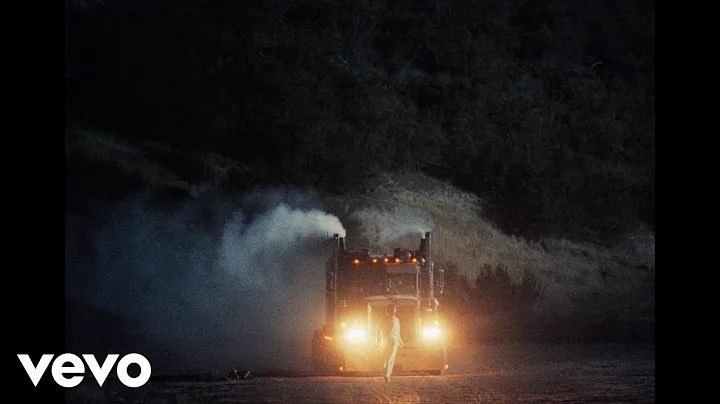
The Sound
The first thing you notice is the silence between the notes. A single piano chord rings out, hollow and untreated, as if recorded in an empty bedroom. Then the 808s enter — not aggressive, but deep and pillowy, more a feeling than a frequency. Luh Kel’s voice slides in, soft but strained, like he’s holding back tears. This is the sonic blueprint of modern heartbreak R&B: a minimalist palette where every element carries maximum emotional weight.
The production on "Wrong" is built around a haunting piano loop that repeats with slight variations, never resolving — a musical metaphor for the obsessive spiral of a broken relationship. The hi-hats are crisp and quantized, straight out of trap, but the kick pattern is lazy, dragging just behind the grid. That tension between precision and looseness is what makes the track feel both contemporary and deeply human. There’s no chorus in the traditional sense — just a series of hooks that repeat like intrusive thoughts.
What makes this work is the restraint. No vocal runs, no ad-libs piled on, no beat switches. The arrangement trusts the listener to sit with the discomfort. Luh Kel’s voice is mixed forward, almost uncomfortably close, as if he’s whispering directly into your ear. The reverb is short, the compression is subtle — this is not a track designed for stadiums. It’s for headphones at 2 AM.
Deep Dive
Lyrically, "Wrong" is a masterclass in specificity. Luh Kel doesn’t sing about heartbreak in the abstract; he sings about a particular argument, a particular text message, a particular moment when everything fell apart. "I know I did you wrong, but girl I'm sorry" — the line is simple, almost cliché, but the delivery makes it land. He stretches the word "wrong" over two syllables, letting his voice crack slightly at the end. It’s the kind of imperfection that studio polish would have erased, and it would have been a mistake to do so.
The songwriting follows a loose verse-chorus structure, but the boundaries blur. The verses are confessional, almost spoken-word, while the hooks are sung in a higher register, as if reaching for something just out of grasp. This dynamic creates an emotional arc within each section — from resignation to desperation and back again. The bridge, if you can call it that, is just Luh Kel repeating "I'm sorry" over the piano, the words dissolving into silence.
Production-wise, the genius is in what’s missing. There’s no bassline beyond the 808, no pads or strings, no countermelody. The piano and drums exist in a vacuum, forcing the vocal to carry all the melodic weight. The mix is intentionally lo-fi — the piano has a slight tape wobble, the drums are clipped, the vocal has a breathiness that suggests a budget microphone. But this isn’t amateurism; it’s aesthetic. The imperfections signal authenticity in a genre where overproduction can kill connection.
Luh Kel’s vocal technique is worth noting. He uses a lot of melisma — sliding between notes — but never in a showy way. It sounds natural, like someone singing to themselves in the car. He also employs a technique called "vocal fry" on certain phrases, adding a texture of exhaustion and regret. These are choices that come from either instinct or deep study of artists like The Weeknd and Bryson Tiller, who pioneered this blend of R&B and trap.
Industry Context
"Wrong" was released as part of Luh Kel’s early catalog, before he signed a major label deal. The video went viral on YouTube organically, driven by the platform’s recommendation algorithm and the song’s resonance with a young, emotionally invested audience. At the time of writing, the track has accumulated tens of millions of streams on Spotify and YouTube, placing it firmly in the upper echelon of independent R&B releases.
What’s notable is the lack of traditional marketing. There was no radio push, no playlist placement campaign, no influencer seeding. The song grew through shares, reaction videos, and fan covers. YouTube’s search algorithm picked up on keywords like "heartbreak songs 2023" and "sad R&B music," and the video started appearing in suggested feeds. This is the new music industry: a well-optimized YouTube video can outperform a million-dollar marketing budget.
Luh Kel’s strategy was simple but effective: release consistently, target emotional keywords, and let the algorithm do the distribution. His channel is a repository of similar tracks — all with the same aesthetic, same production style, same emotional core. This consistency builds a brand that YouTube’s algorithm can recognize and reward. For creators, this is the most important lesson: pick a lane and own it.
From a business perspective, "Wrong" represents the viability of the independent artist model. Luh Kel retains ownership of his masters, controls his release schedule, and keeps a larger share of streaming revenue. The trade-off is that he has to do everything — recording, mixing, video production, thumbnail design, SEO — but the payoff is creative freedom and long-term asset building. In an industry where labels are increasingly risk-averse, independent artists who understand YouTube’s mechanics have a real advantage.
Cultural Impact
"Wrong" is part of a larger wave of emo-rap and melodic R&B that has dominated streaming since the late 2010s. Artists like Juice WRLD, XXXTentacion, and Lil Peep normalized vulnerability in hip-hop, and Luh Kel is a direct descendant of that lineage. But where those artists often leaned into chaos and darkness, Luh Kel’s music is quieter, more introspective. It’s the sound of someone processing pain rather than drowning in it.
The song has found a particular home on TikTok, where snippets are used for breakup videos, sad edits, and emotional confessions. The platform’s short-form format favors tracks with a strong, repeatable hook, and "Wrong" delivers. The line "I know I did you wrong" has become a meme template, but it’s also a genuine emotional touchstone for a generation that communicates through music.
Critically, "Wrong" has been praised for its authenticity but also dismissed as derivative. The emo-R&B sound is well-trodden by now, and some listeners find Luh Kel’s delivery too similar to his influences. But this criticism misses the point: genre music isn’t about innovation; it’s about execution. Luh Kel executes the formula flawlessly, and that’s enough to connect with millions of listeners who don’t care about originality — they care about feeling heard.
For Music Creators
If you’re a producer or artist looking to replicate the success of "Wrong," start with the production. The track’s core is a simple piano loop — two or three chords, played with space between them. Layer a trap drum pattern with a slow hi-hat roll and a deep 808 that hits on the downbeat. Keep the arrangement sparse; leave room for the vocal to breathe. Use saturation and tape emulation to give the mix a warm, lo-fi character.
For songwriters, focus on specificity. Write about a real experience — a specific fight, a specific person, a specific feeling. Avoid generic statements like "I miss you" and instead describe what you miss: the way they laughed, the smell of their hoodie, the sound of their car pulling into the driveway. The more concrete the imagery, the more universal the song becomes.
On YouTube, optimize your video for search. Use keywords in your title and description that reflect the emotional content of the song — "sad R&B song about heartbreak," "emotional breakup music," "crying in the car playlist." Create a thumbnail that shows genuine emotion, not just a cool pose. And release consistently: one video per week, same aesthetic, same vibe. The algorithm rewards predictability.
Finally, engage with your audience. Reply to comments, repost covers, and build a community around your music. Luh Kel’s success wasn’t just about the song; it was about the connection he built with listeners who felt like he was singing their story. That’s the real secret — not better beats or smarter marketing, but genuine emotional resonance.
Verdict
"Wrong" is not a groundbreaking song. It doesn’t reinvent R&B or push the genre forward. But that’s not the point. The song is a perfect execution of a proven formula, delivered with enough authenticity to cut through the noise. For music creators, it’s a case study in how to build a career on YouTube without a label, without a budget, and without compromise.
Will it last? Probably not in the canon of great R&B songs. But it will last in the playlists of millions of listeners who need a soundtrack for their heartbreak. And for Luh Kel, that’s enough. The track has already served its purpose: launching a career, building a fanbase, and proving that in the modern music industry, the most powerful tool isn’t a studio or a label — it’s a story that people want to hear.