The Core Idea
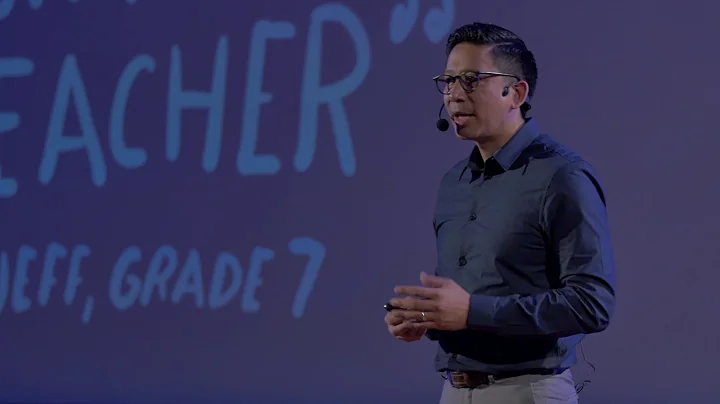
Here's a mental model that will change how you think about education: it's not just a service for children — it's the invisible infrastructure of every community. Just like roads, schools affect everyone, even if you never set foot in one. The key insight from this talk is that education sits at an intersection of opportunity and challenge: we have more choices than ever before, yet we risk leaving behind the very students who need the most support.
Why is this valuable? Because the quality of a child's education should never depend on the family they were born into. This principle — equity of opportunity — is the foundation of a strong democracy and economy. If you're a creator, a teacher, or a lifelong learner, understanding these dynamics helps you see that every conversation about schools is really a conversation about the future we want to build together.
Building Blocks
Let's start with the fundamentals. The world has changed, but children haven't. Kids still want to be loved, to be good at something, and to feel the thrill of overcoming a challenge. What has shifted is the environment they grow up in. In an age of smartphones and instant answers, schools can't just deliver facts — they must teach problem-solving, creative thinking, and how to use time flexibly.
Think of it like this: the old industrial model was a conveyor belt. Every student got the same education at the same pace. Today, schools are experimenting with differentiation (tailoring instruction to varied abilities), acceleration (earning college credits in high school), and even starting the school day later to match teen sleep cycles. These are not gimmicks — they are evidence-based responses to real human needs.
Now, layer on the three big conversations that shape our schools. First, **teacher supply**. We need the best and brightest in classrooms, but the profession is often undervalued. The speaker herself was a law enforcement officer before someone suggested she become a teacher. That simple act of encouragement changed her life. We must actively recruit not just young people, but career-changers, into education.
Second, **public funding**. When tax bills arrive, some people ask, "Why should I pay for schools if I don't have kids?" The answer is simple: the quality of your daily life depends on educated neighbors — the mechanic, the nurse, the cashier. Schools are a public good, like roads. You may never drive on every road, but you benefit from the system.
Third, **school vouchers**. On the surface, vouchers seem like a way to give poor families choice. But the speaker points out a hidden trap: vouchers drain money from public schools without accountability. The students left behind in underfunded schools face even greater challenges. The goal, she argues, should be to make every public school a school of choice — not to create a separate system.
Learning Framework
To master this topic, use a structured approach I call the "Three Lenses" framework:
1. **The Personal Lens**: Reflect on your own education. What worked? What didn't? How did your school shape your opportunities? This builds empathy and context.
2. **The Systemic Lens**: Look at data. 90% of U.S. students attend public schools. Parent satisfaction is at an all-time high (since 2010). Yet the loudest conversations often focus on failure. Why the disconnect? Practice active recall by writing down one statistic that surprised you and explaining it to someone.
3. **The Action Lens**: Ask yourself: What can I do? You don't have to be a teacher to support education. Vote for funding. Volunteer. Speak up when you hear negative generalizations about schools. Use deliberate practice by challenging one misconception about public education each week.
For visual learners, create a mind map with "Education as Public Trust" at the center, branching out to teachers, funding, and policy. For auditory learners, listen to the talk again and note the emotional tone — the speaker's passion is a data point in itself.
Common Learning Traps
Beginners often fall into the trap of **binary thinking** — assuming public schools are either "good" or "bad." The reality is that schools vary wildly by community. Some are thriving; others struggle with teacher shortages and poverty. The mistake is to generalize from one experience.
Another trap is **ignoring the data**. For example, many people assume voucher programs are a win-win. But the speaker shows that they can actually hurt the most vulnerable students. To avoid this, always ask: "Who is left behind?"
Finally, **plateaus happen** when you focus only on problems without solutions. It's easy to feel overwhelmed by the scale of education challenges. Combat this by celebrating small wins — a teacher who inspired you, a student who succeeded against odds. These stories fuel the long-term work.
Going Deeper
For those who want to go beyond the basics, consider the historical context. In the 1920s, only 22% of young adults completed high school. Back then, alternatives existed — factory jobs, family farms, military service. Today, high school graduation is the bare minimum for a stable future. This shift makes the stakes higher than ever.
Advanced learners should explore the tension between **choice and equity**. The speaker doesn't oppose all alternatives — she supports charters, virtual schools, and homeschooling as options. But she insists that public schools must be the foundation. A related skill is learning to evaluate policy proposals with a critical eye. For example, ask: "Does this policy improve the school for the students who stay, or does it only help a few escape?"
Next steps: Read about the history of public education in your country. Compare it to systems in Finland or Singapore. Notice how different funding models produce different outcomes. This comparative approach will deepen your understanding of the core ideas.
Your Learning Path
Here's your roadmap. Start by watching the full talk (it's only 15 minutes). Then, write down three things you learned and one action you can take this week. Action ideas: attend a school board meeting, thank a teacher, or share this article with someone who thinks education doesn't affect them.
Next, practice the "Three Lenses" framework for one month. Keep a journal. Each week, focus on one lens. By the end, you'll have a nuanced, informed perspective that goes beyond soundbites.
Finally, if you're a content creator, use these insights to craft videos that reframe the education debate. Instead of clickbait about "failing schools," tell stories of innovation and dedication. Show the data. Interview teachers. Your audience is hungry for substance — give them the tools to think differently.
Remember the speaker's closing challenge: "Let's take a risk. Let's step out of our comfort zone and start changing some of these conversations." The future of education depends on it.