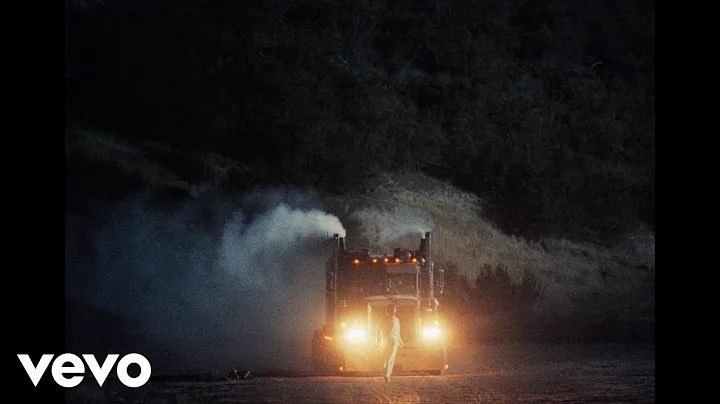
The Sound
The first thing that hits you about Asake's 'Forgiveness' isn't a beat drop or a vocal hook — it's the space. The track opens with a sparse, melancholic piano loop that feels almost unfinished, like a sketch left on a table. Then the Amapiano log drums creep in, low and patient, and suddenly the room breathes. This is the kind of production that doesn't demand your attention; it earns it.
Sonically, 'Forgiveness' sits at the intersection of Afrobeat's rhythmic urgency and Amapiano's laid-back, log-drum-driven groove. The palette is intentionally minimal — a few keys, a bassline that moves with the kick, and Asake's voice floating above it all. There's no clutter, no gratuitous synth pads or vocal ad-libs. Every element has a job, and nothing overstays its welcome.
The production credits read like a who's who of the new wave: Magicsticks and Nana Ntorinkansah, both known for their work with the YBNL and GIRAN Republic camps. Their signature is in the details — the way the hi-hats are slightly swung, the way the vocal reverb is cut short to keep the mix dry. It's a sound that feels both traditional and futuristic, rooted in Yoruba melodic sensibilities but engineered for global streaming playlists.
Deep Dive
Let's talk about the arrangement, because 'Forgiveness' is a masterclass in restraint. The track runs just over three minutes, and it doesn't waste a second. The intro establishes the piano riff for eight bars before the drums enter. Asake's first verse arrives almost immediately, his delivery conversational, almost like he's speaking to someone in the room. There's no big build-up, no pre-chorus tension — just a steady, hypnotic flow.
The genius of this arrangement is in the repetition. The chorus — 'Forgiveness, forgiveness' — is a mantra, not a melody. It doesn't soar; it sinks into you. This is a deliberate songwriting choice: by stripping away harmonic complexity, Asake forces the listener to focus on emotion. You're not analyzing chord changes; you're feeling the weight of the word.
Production-wise, the track uses a technique I call 'negative space mixing.' The kick and snare are punchy but not over-compressed, leaving room for the piano to breathe. The bass is more felt than heard, sitting just below the threshold of perception. Asake's vocal is front and center, but it's layered with a subtle harmony an octave below — a trick that adds depth without clutter.
What really stands out is the bridge, or what passes for one. Around the 2:15 mark, the drums drop out entirely, leaving just the piano and vocal. It's a moment of vulnerability that pays off when the beat returns with a doubled vocal. This is classic Afrobeat storytelling: the music mirrors the emotional arc of the lyrics. When Asake sings about letting go, the production lets go too.
Industry Context
'Forgiveness' arrives at a pivotal moment for Asake. After the massive success of 'Mr. Money With The Vibe' and 'Work Of Art,' the pressure is on to sustain momentum. The track is released under GIRAN Republic, distributed by EMPIRE — a partnership that has become one of the most formidable independent distribution deals in African music. EMPIRE has a knack for positioning Afrobeat artists on global playlists, and 'Forgiveness' is clearly designed for algorithmic discovery.
Streaming numbers aren't available yet for this 2026 release, but the strategy is clear: drop a single with a strong emotional hook, let it simmer on playlists, then follow with an album. The track's length — just over three minutes — is optimized for streaming royalties, where shorter songs often perform better on repeat plays. It's also worth noting the absence of a feature. In an era where collaborations are the norm, Asake is betting on his solo brand. That's confident, but risky.
From a business perspective, 'Forgiveness' is a textbook example of the 'single-first' model. No album announcement, no hype campaign — just the song. This approach works when the artist has built enough trust with their audience. Asake's fanbase is loyal enough to follow the breadcrumbs, and EMPIRE's distribution ensures the track lands on every major platform simultaneously.
Cultural Impact
Asake has become a cultural force in Nigeria and beyond, and 'Forgiveness' continues that trajectory. The track taps into a universal theme — the struggle to forgive — but filters it through a distinctly Lagos lens. The lyrics are in Yoruba and Pidgin, but the emotion transcends language. This is the kind of song that gets played at weddings, at funerals, on late-night drives.
What's interesting is how 'Forgiveness' fits into the broader evolution of Afrobeat. The genre has moved from the high-energy, brass-heavy sound of the 2010s to a more introspective, production-forward style. Artists like Asake, Omah Lay, and Ayra Starr are leading this shift, and 'Forgiveness' is a perfect example. It's not a dance track, but it still moves you. It's not a ballad, but it's tender.
On TikTok, the track is already spawning challenges and emotional reaction videos. The simplicity of the hook makes it easy to remix, and the emotional weight makes it shareable. This is the kind of organic virality that labels can't manufacture — it comes from genuine resonance.
For Music Creators
There are three lessons in 'Forgiveness' that every producer and artist should study. First: space is a tool. Don't fill every frequency. Let the kick breathe, let the vocal sit alone. The most powerful moments in this track are the quiet ones.
Second: repetition is not laziness. The mantra-like chorus works because it's emotionally earned. If you're going to repeat a phrase, make sure it carries weight. Asake delivers 'forgiveness' like it's the hardest word to say — and that's what makes it stick.
Third: trust your voice. Asake doesn't over-sing. He doesn't run runs or show off his range. He stays in a comfortable register and lets the emotion do the work. For creators, this is a reminder that authenticity beats technical perfection every time.
From a production standpoint, experiment with negative space mixing. Try removing elements instead of adding them. If your track feels cluttered, cut the hi-hats for a bar, or drop the bass on the chorus. You'll be surprised how much energy that creates.
Verdict
'Forgiveness' is not Asake's most ambitious song, but it might be his most honest. It's a quiet statement in a loud industry, and that's exactly why it works. The production is restrained, the songwriting is direct, and the delivery is vulnerable. In a landscape dominated by bangers and flex anthems, 'Forgiveness' dares to be still.
Will it last? I think so. This is the kind of track that grows with time — a sleeper hit that reveals new details on each listen. For fans of Afrobeat, it's essential listening. For creators, it's a masterclass in economy. Asake continues to prove that you don't need to shout to be heard. Sometimes, you just need to ask for forgiveness.