The Sound
The first few seconds of Tems' "What You Need" are a masterclass in restraint. A single, slightly detuned piano note hangs in the air like a held breath. Then, a sparse, almost skeletal beat enters—a kick drum that lands with a soft thud, a hi-hat that sizzles at the edges, and a bassline that feels more like a suggestion than a statement. This is not the bombastic, beat-driven sound that dominates much of contemporary Afrobeat. Instead, Tems has carved out a lane that is entirely her own: a minimalist, emotionally raw fusion of R&B, soul, and the rhythmic undercurrents of her Nigerian heritage.
The production here is built around a haunting piano loop that repeats with subtle variations, creating a hypnotic, almost meditative quality. The space between the notes is as important as the notes themselves. It’s a sonic palette that prioritizes atmosphere over aggression, vulnerability over volume. This is music that demands you lean in, not music that forces you to move. And yet, there is a quiet, undeniable groove—a pocket so deep it pulls you in without you realizing it. The influence of classic 90s R&B is palpable, but filtered through a contemporary, distinctly African lens. You can hear echoes of Sade’s cool elegance, the raw emotionality of early Erykah Badu, and the rhythmic sophistication of Fela Kuti, all distilled into something that feels both timeless and utterly modern.
Deep Dive
What makes "What You Need" work is its radical simplicity. The songwriting is deceptively straightforward, but every element is placed with surgical precision. The verse melody is conversational, almost spoken, allowing Tems’ voice to become the primary instrument. Her vocal delivery is the track’s gravitational center—a rich, smoky alto that can shift from a whisper to a soaring cry in a single phrase. She doesn’t rely on vocal acrobatics; instead, she conveys emotion through texture and tone. The way she stretches the word "need" on the hook, letting it hang and decay, is a lesson in using restraint as a tool for maximum impact.
The arrangement follows a classic build-and-release structure, but it’s executed with uncommon subtlety. The first verse is stark—just voice and piano. The pre-chorus introduces the bass and drums, but they remain low in the mix. Then, the chorus hits, and the entire sonic picture opens up. A layer of atmospheric pads enters, the vocal doubles, and the drums gain a slight, propulsive urgency. But even at its peak, the track never feels crowded. Tems and her producer(s) understand the power of negative space. The bridge strips everything back to the piano and voice again, creating a moment of intense intimacy before the final chorus swells one last time.
From a production standpoint, the track is a study in contrast. The low end is warm and round, while the high end is crisp and airy. The reverb is used sparingly, creating a sense of closeness rather than vastness. This is not a song designed for a stadium; it’s designed for headphones, late at night, in a quiet room. The vocal mixing is particularly noteworthy: Tems’ voice sits front and center, dry and present, with just a touch of delay on certain phrases. This makes every lyrical nuance feel personal, as if she’s singing directly to you. The genius of this arrangement is that it makes the listener work—it rewards close attention with emotional payoff.
Industry Context
"What You Need" arrives at a pivotal moment for Tems and for African music on the global stage. Following her Grammy win for her contribution to Future and Drake’s “Wait For U” and her Oscar nomination for “Lift Me Up” from *Black Panther: Wakanda Forever*, Tems has transitioned from a promising newcomer to a bonafide international star. This single, the lead from her debut album *Born in the Wild*, is not just a song; it’s a statement of intent. It signals that Tems will not be boxed into a single genre or commercial expectation.
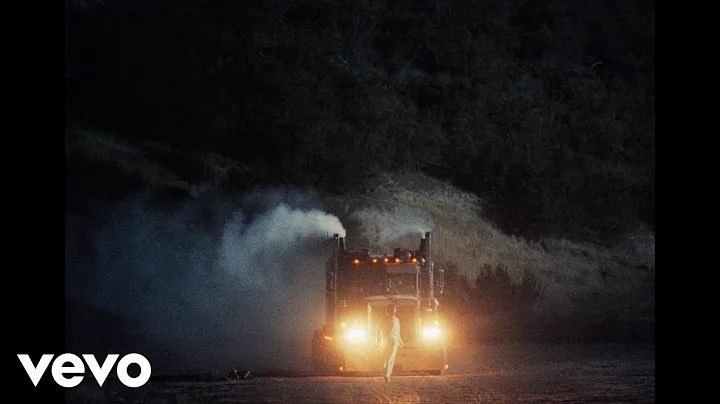
The strategy here is telling. The video, directed by Tems herself, is a visual extension of the song’s intimacy. Shot in stark black and white, it focuses almost entirely on her face and her subtle, expressive movements. There are no flashy dance routines, no luxury cars, no product placements. In an era where music videos often feel like hyper-commercial mood boards, this is a radical act of artistic defiance. It’s a bet on emotional connection over viral potential.
From a streaming perspective, the track is performing well, but it’s not a blowout hit in the traditional sense. It’s a slow burner. This is typical for Tems’ catalog—her songs tend to grow through word-of-mouth, playlisting, and sync placements rather than explosive first-week numbers. Her label, RCA Records, has clearly given her the creative freedom to build a long-term career rather than chase short-term trends. This is the luxury of having critical acclaim and a loyal fanbase. For emerging artists, the lesson is clear: authenticity and patience can be more valuable than chasing the algorithm.
Cultural Impact
Tems is at the forefront of a new wave of African artists who are redefining what “global music” sounds like. She is part of a cohort—alongside artists like Ayra Starr, Omah Lay, and Libianca—who are blending Afrobeats with R&B, soul, and alternative pop in ways that feel organic, not forced. This is not a crossover attempt; it’s a natural evolution of the sound. The cultural impact of "What You Need" lies in its refusal to compromise. It asserts that African music can be introspective, minimalist, and emotionally complex, not just energetic and danceable.
On social media, particularly TikTok, the song has found a niche audience. Users are using it for aesthetic, slow-motion videos—studying, crying, staring out of windows. It’s become a soundtrack for introspection. This is a different kind of virality, one built on mood and atmosphere rather than a dance challenge. It speaks to a growing appetite for “sad girl” and “sad boy” anthems within the African diaspora, a space traditionally dominated by American and British artists.
Critically, the song has been lauded for its maturity and restraint. It’s a testament to Tems’ growth as a songwriter and producer. She is not just a vocalist; she is a curator of mood. This positions her as an artist with staying power, someone who can evolve with her audience. The cultural conversation around the track is less about its commercial performance and more about its artistic statement. It’s a marker of a scene that is maturing, diversifying, and demanding to be taken seriously on its own terms.
For Music Creators
For producers and artists looking to learn from "What You Need," the first lesson is in restraint. In a world of overproduced, loud, and cluttered tracks, this song demonstrates the power of minimalism. Start with one element—a piano loop, a vocal hook, a drum pattern—and build outward only when necessary. Ask yourself: does this element serve the emotion of the song? If not, cut it.
Second, focus on vocal production. Tems’ voice is the star of the show. Record in a space that allows for a dry, intimate sound. Experiment with double-tracking on choruses to add weight without increasing volume. Use reverb and delay as accents, not crutches. The goal is to make the listener feel like they are in the room with the singer.
Third, embrace genre fluidity. The most exciting music today comes from artists who refuse to be boxed in. If you’re an Afrobeats producer, study R&B and soul chord progressions. If you’re an R&B singer, explore African rhythms and scales. The fusion of these worlds is where the magic happens. Finally, think about the visual narrative. Tems’ video proves that a low-budget, high-concept visual can be more impactful than a flashy, expensive one. Focus on emotion, lighting, and performance. Let the music lead.
Verdict
"What You Need" is a significant track, not because it will dominate the charts for months, but because it solidifies Tems as one of the most important voices in contemporary music. It’s a statement of artistic integrity in an industry that often rewards the opposite. This is a song that will be studied by future producers and songwriters for its economy of means and emotional depth. It may not be for everyone—its quietness can be mistaken for weakness by those accustomed to high-energy bangers—but for those who listen closely, it’s a revelation.
Is it her best work? It’s too early to say, but it’s a strong contender. It feels like a mission statement for the album to come. Creators should listen to this track not just as fans, but as students. There is a masterclass in here about pacing, space, and the power of a single, well-placed note. Tems has given us something rare: a song that asks for nothing but demands everything.