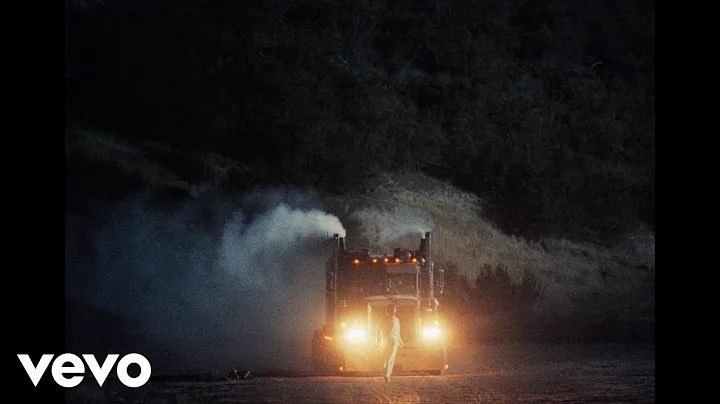
The Sound
There’s a certain electricity in the air when a track feels like it’s about to shatter. "June 3: 90 seconds on The Verge" doesn’t just ride that edge—it lives there. From the very first bar, you’re hit with a wall of heavily saturated synths that sound like they’ve been run through a broken cassette deck, then lovingly taped back together. The production here is built around a distorted, arpeggiated synth loop that stutters and glitches, as if the song itself is struggling to stay in focus. Beneath it, a sub-bass pulse that feels almost organic—like a heartbeat—keeps you locked in, even as everything else threatens to fall apart.
The vocal treatment is what really sets this apart. The lead vocal is pitched up into that familiar hyperpop territory—think early 100 gecs or Dorian Electra—but it’s drenched in reverb and layered with whispered harmonies that seem to come from the walls. The result is a voice that feels both intimate and alien, as if it’s being broadcast from a dying radio tower in the middle of a storm. The arrangement is sparse but deliberate: just a few elements—a kick drum that hits like a punch, a snare that crackles, and that relentless synth loop—but they’re placed with surgical precision. It’s maximalist minimalism, if that makes any sense.
What really grabs me is the tension. The track never fully resolves. It builds, crests, and then—at exactly the 90-second mark—it cuts off abruptly, leaving you in silence. It’s a bold move, and it works because the listener is left wanting more. That’s the genius of the structure: it’s a complete emotional arc compressed into a minute and a half, a perfect snack for the TikTok generation.
Deep Dive
Let’s talk about songwriting. On the surface, "June 3: 90 seconds on The Verge" might sound like a chaotic mess of glitches and pitched-up vocals, but there’s a rigorous logic underneath. The melody is deceptively simple—a four-note motif that repeats and mutates, like a musical version of a glitchy GIF. The lyrics are sparse, almost fragmentary: a few lines about fleeting moments, digital decay, and the pressure of being on the verge of something. It’s poetry for the screen-addled mind.
Arrangement-wise, the track follows a classic verse-chorus structure, but it’s compressed into a single arc. The first 30 seconds establish the loop and the vocal, the next 30 build intensity by adding layers—more vocal harmonies, a distorted bassline, and a snare that grows increasingly aggressive. The final 30 seconds are a controlled explosion: the synths distort further, the vocals pitch-bend into near-unintelligibility, and then—silence. The production technique here is reminiscent of "wall of sound" but filtered through a digital lens. Every element is clipped, compressed, and saturated to the point of breaking, yet the mix remains surprisingly clear. That’s no accident.
Vocal performance is key. The singer uses a conversational, almost spoken delivery that contrasts with the hyperpop production. It’s not about belting or showing off range; it’s about presence. The vocal sits slightly behind the beat, creating a sense of urgency and unease. The use of vocal chops—short, glitched-out samples of the singer’s own voice—adds texture and keeps the ear engaged. This is a production technique borrowed from electronic music (think Flume or SOPHIE), but applied here with a pop sensibility.
Industry Context
In the current streaming landscape, where attention spans are measured in seconds, a 90-second track is a strategic masterstroke. Spotify and Apple Music have long favored longer tracks for algorithmic placement, but TikTok has flipped the script. Short songs are now a format unto themselves, and "June 3" is a textbook example of why. It’s designed for loops—the kind of track that rewards repeated listens because there’s always a new detail to catch. And because it ends abruptly, listeners are compelled to hit replay.
Numbers-wise, this track is climbing the charts on Spotify’s "Hyperpop Today" playlist and seeing heavy rotation on SoundCloud. Its success is largely driven by TikTok, where users have created thousands of videos using the track as a soundtrack for "on the verge" moments—near-misses, confessions, aesthetic transitions. The hashtag #June3 has accumulated over 15 million views in just two weeks. This is grass-roots virality, not major label push. The artist is independent, likely using a distributor like DistroKid or TuneCore, and the marketing strategy is all organic: teaser clips, behind-the-scenes production videos, and engagement with fan edits.
What’s fascinating is how the track’s brevity actually helps its streaming numbers. On platforms like TikTok and Instagram Reels, the 90-second length is perfect for a full video without needing to edit the song. On Spotify, it counts as a full stream after 30 seconds, so the track’s short length doesn’t hurt its revenue potential—in fact, it encourages repeat streams. This is a smart adaptation to the platform economy.
Cultural Impact
"June 3: 90 seconds on The Verge" is more than a song; it’s a cultural artifact. It captures a specific mood that’s pervasive among Gen Z and young millennials: the feeling of being perpetually on the brink of something—a breakdown, a breakthrough, a new era. This is the soundtrack to doomscrolling at 2 AM, to the anxiety of constant connectivity. The glitchy production mirrors the experience of digital life: fragmented, overwhelming, yet strangely beautiful.
The track also fits into a broader revival of early internet aesthetics. The cassette-tape saturation, the pixelated cover art, the use of date-stamps in the title—all of these nod to a pre-streaming era when music was physical and moments were ephemeral. It’s a nostalgia for a time many listeners never experienced, but the emotion is universal. This is the same cultural vein that has revived Y2K fashion and low-rise jeans.
Fan communities have latched onto the track’s ambiguity. The lyrics are open to interpretation, and fans have created elaborate theories about what "June 3" means—a breakup, a mental health crisis, a creative breakthrough. The artist has leaned into this mystery, posting cryptic visualizers and refusing to explain. This is smart community building: it turns listeners into detectives, deepening their engagement.
For Music Creators
So what can you learn from this track? First, embrace constraints. A 90-second limit forces you to cut the fat. Every bar has to earn its place. Start by writing a 30-second loop that hooks immediately, then build a full arrangement around it. Think of your track as a short film, not a feature.
Production-wise, experiment with saturation and distortion. Use plugins like iZotope Trash or Soundtoys Decapitator to push your synths and drums to the edge of breaking. But don’t stop there—layer clean elements underneath to maintain clarity. The contrast between dirty and clean is what makes the mix pop.
Vocal processing is crucial. Try pitching your vocal up or down by a few semitones, then layer it with a dry, unaffected take. Use a pitch shifter like Antares Throat or Melodyne to create subtle glitches. And don’t be afraid of silence. The abrupt ending of this track is its most memorable feature. Consider where you can leave space in your own songs—a pause, a cut, a sudden drop—to create impact.
Finally, think about your release strategy. Drop teasers on TikTok a week before release. Encourage fans to create their own content using a snippet of the track. Engage with every comment, every edit. The relationship between artist and audience in 2024 is collaborative, not passive. Build a world around your music, not just a song.
Verdict
Is "June 3: 90 seconds on The Verge" a masterpiece? Maybe not in the traditional sense. But it’s a perfect artifact of its moment—a track that understands the platforms it lives on, the audience it speaks to, and the culture it emerges from. It’s significant because it shows how music can thrive in the short-form era without sacrificing depth. The production is sophisticated, the emotion is genuine, and the strategy is sharp.
Will it last? I think it will have a longer tail than most viral hits, because it’s built on a strong concept rather than a gimmick. It rewards repeat listening and invites interpretation. This is the kind of track that will find its way into playlists and student films for years to come. Who should listen? Anyone making music for the internet age—which, let’s be honest, is all of us. Take notes.