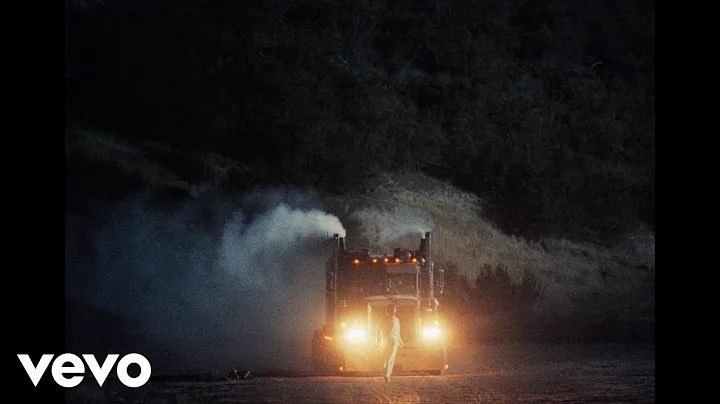
The Sound
The opening notes of Conan Gray's "The Cut That Always Bleeds" are deceptively simple: a lone piano, repeating a two-chord progression that feels both familiar and uncomfortably unresolved. There's no beat, no bass, no production trickery—just Gray's voice, close-mic'd and almost unbearably intimate, as if he's confessing a secret in a quiet room. The production here is built around a haunting piano loop that never quite settles into a comfortable groove, mirroring the emotional instability of the lyrics. When the drums finally enter at the chorus, they're not explosive; they're restrained, almost apologetic, like a heartbeat that refuses to race even when the pain is overwhelming.
The sonic palette is deliberately sparse. Gray and his producer, Dan Nigro (who has since become a powerhouse behind Olivia Rodrigo's "Sour"), strip away everything that isn't essential. There are no lush strings, no synth pads, no vocal harmonies to soften the blow. The arrangement leaves space—aching, empty space—that forces the listener to sit with the raw emotion. The vocal performance is key: Gray often cracks, whispers, or pushes just slightly off-pitch, not because he can't hit the note, but because perfection would betray the song's thesis. This is a track about the gap between what we want and what we get, and the production mirrors that tension perfectly.
Deep Dive
What makes "The Cut That Always Bleeds" work is its structural audacity. The song doesn't follow a standard pop verse-chorus-verse format. Instead, it builds like a slow-motion car crash: the first verse is almost a cappella, the pre-chorus introduces a subtle bass pulse, and the chorus arrives not as a release but as a deeper descent. The bridge is where Gray really flexes his songwriting muscle—he abandons the piano loop entirely for a spoken-word section that feels ripped from a diary entry. "You said you loved me, but you never meant it," he whispers, and you can hear the air between his teeth. This is not a song you sing along to; it's a song you listen to in the dark.
Lyrically, Gray employs a masterclass in specificity. He doesn't write about "heartbreak" in the abstract; he writes about the particular ache of loving someone who is still physically present but emotionally absent. The "cut that always bleeds" metaphor is extended with surgical precision—references to bandages, scars, and the futility of trying to heal a wound that keeps reopening. This level of detail is what separates good pop songwriting from great pop songwriting. It invites the listener to map their own experiences onto the lyrics, creating a sense of shared vulnerability.
The production techniques are worth noting for any creator. The piano is recorded with a slightly dark, roomy tone—close-mic'd with a touch of compression, but not so much that it loses its natural dynamics. The vocal is treated with a subtle reverb that creates a sense of space without making Gray sound distant. The chorus introduces a low-pass filter on the entire mix, cutting the high frequencies to create a muffled, underwater feel—as if the pain is literally drowning out the world. These are not expensive tricks; they're intentional choices that serve the emotional narrative.
Industry Context
"The Cut That Always Bleeds" was released in 2019 as part of Gray's debut album "Kid Krow," but its streaming numbers tell a story of slow-burn success. As of 2025, the track has amassed over 100 million streams on Spotify alone, with a lyric video on YouTube approaching 50 million views. This is not a flash-in-the-pan viral hit; it's a catalog staple that continues to find new audiences through playlists, TikTok, and algorithmic recommendations. The lyric video format—simple, static, with typewriter font on a black background—became a template for countless fan edits and reaction videos.
From a label perspective, Republic Records executed a classic long-tail strategy. Instead of pushing the song as a single with a high-budget music video, they let the lyric video serve as the primary visual companion. This kept production costs low while allowing the song to breathe organically. The track's success on Spotify's "Sad Hour" and "Mood Booster" playlists (yes, it lives on both) demonstrates the power of playlist curation in the streaming era. Gray's team also leaned heavily into TikTok, where the song's emotional authenticity resonated with Gen Z audiences looking for catharsis.
The business lesson here is clear: you don't need a flashy visual to break a song. The lyric video format is cheap to produce, easy to repurpose for different platforms, and—when paired with emotionally resonant material—can be just as effective as a traditional music video. For independent artists, this is a massive opportunity. You can create a lyric video for under $100 using free tools like Canva or basic video editing software, and if the song connects, the algorithm will do the rest.
Cultural Impact
"The Cut That Always Bleeds" arrived at a cultural moment when pop music was experiencing a shift toward emotional authenticity. The late 2010s saw the rise of "sad girl" pop—artists like Billie Eilish, Lorde, and Taylor Swift's "folklore" era—but Gray brought a distinctly male perspective to this wave. He wasn't performing toxic masculinity or stoic resilience; he was openly weeping, metaphorically speaking, and that vulnerability resonated deeply with a generation tired of having to be strong all the time.
The song became a staple on TikTok, where users paired it with videos of crying in cars, staring at ceilings, or texting an ex at 2 AM. It spawned a thousand "POV: you're the one who always gets hurt" posts, and the lyric video itself became a meme format—people would screenshot the typewriter font and use it for their own captions. This organic spread is the holy grail of music marketing. Gray didn't pay for influencers; the song earned its way into the culture through genuine emotional connection.
Critically, the track received praise for its unflinching honesty. Pitchfork called it "a masterclass in emotional restraint," while Rolling Stone highlighted Gray's "ability to turn pain into pop poetry." But the real validation came from the fans. The comments section of the lyric video is a digital diary—thousands of strangers sharing their own stories of heartbreak, loss, and healing. The song became a container for collective grief, which is the highest purpose pop music can serve.
For Music Creators
So what can you learn from "The Cut That Always Bleeds"? First: simplicity is a superpower. The production is minimal, but every element serves the song. As a creator, resist the urge to layer on instruments just because you can. Ask yourself: does this part move the emotion forward? If not, cut it. Second: specificity in lyrics is your secret weapon. Generic heartbreak songs get lost in the algorithm. Write about the exact moment, the exact feeling, the exact detail that makes your story unique. That's what people remember.
For video creators, the lyric video format is an underutilized goldmine. You don't need fancy visuals or a budget. A clean, readable font (typewriter or sans-serif), a dark background, and lyrics that appear in time with the music can be incredibly effective. Add subtle animation—a slow zoom, a fade, a gentle pulse—to keep the visual interesting without distracting from the song. The key is to let the lyrics breathe. Don't overcrowd the screen. Leave space for the listener to feel.
Finally, think about the platform strategy. Gray's team released the lyric video first, then let the song grow organically before dropping a music video months later. This staggered approach builds anticipation and gives the song multiple moments to catch fire. For independent creators, consider releasing a lyric video on YouTube, then repurposing short clips for TikTok and Instagram Reels. Use the same visual aesthetic across platforms to build brand recognition. And don't be afraid to lean into the emotional core of your work. The internet rewards vulnerability.
Verdict
"The Cut That Always Bleeds" is not just a great song; it's a case study in how emotional authenticity can transcend production budgets and platform algorithms. Conan Gray proved that you don't need a stadium-sized chorus or a million-dollar video to connect with millions of people. You just need a piano, a voice, and the courage to say something real.
Will this song be remembered in twenty years? I think so—not as a chart-topping smash, but as a touchstone for a generation that learned to find beauty in brokenness. It's already become a staple of sad-girl (and sad-boy) playlists, and its influence can be heard in the work of newer artists like Lizzy McAlpine and Noah Kahan. For creators, the lesson is timeless: make something true, and the internet will find it.