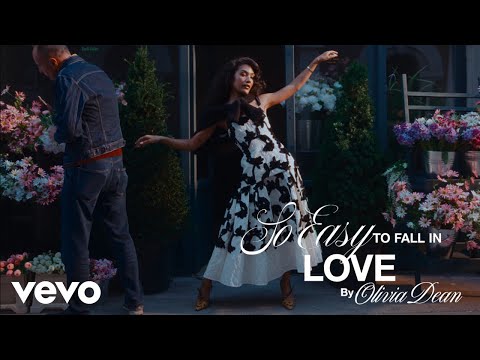
The Sound
The first thing that hits you is the warmth. Not from a roaring fire, but from the intimate, almost whispered vocal delivery that anchors this entire collection. The production here is built around a bed of acoustic guitars — fingerpicked, gently strummed, never rushed. There’s a deliberate sparseness, a refusal to clutter the sonic space with anything that might distract from the raw emotion. Piano lines drift in and out like morning fog, and when a subtle string pad or a soft synth wash appears, it feels earned, not imposed.
This is the sound of 2026’s acoustic revival: a return to the campfire, to the bedroom, to the single microphone in a quiet room. The songs — covers of recent pop hits like Billie Eilish’s “Birds of a Feather,” Laufey’s “From the Start,” and older staples like “Stand By Me” and “Let Her Go” — are stripped of their original production’s bombast. The beat drops are gone. The 808s are silent. What remains is the skeleton of the song: melody, harmony, and a voice that sounds like it’s confessing a secret.
The sonic palette is intentionally limited. Acoustic guitar (mostly steel-string, occasionally nylon), piano, light percussion (a shaker, a brushed snare), and layered vocals. The reverb is generous but not cavernous — think a large living room with hardwood floors, not a cathedral. This creates an immediacy, a sense that the performer is right there with you, singing not for a crowd but for one person. It’s the sonic equivalent of a handwritten letter in an age of text messages.
Deep Dive
Let’s get into the weeds. The arrangement of each track follows a similar arc: a sparse intro that establishes the harmonic foundation, a verse that relies on rhythmic variation in the guitar strumming, and a chorus that opens up with doubled vocals and a slightly fuller instrumental texture. Take the cover of “Birds of a Feather.” The original by Billie Eilish has a driving, syncopated beat and a dark, synth-heavy production. Here, it’s reimagined with a fingerpicked guitar pattern that emphasizes the song’s inherent melancholy. The vocalist doesn’t try to mimic Eilish’s breathy style; instead, they lean into a more open, resonant tone, adding a layer of earnest vulnerability.
The songwriting, even in these covers, reveals what makes a song survive a radical reduction. “Let Her Go” by Passenger is a masterclass in this. The original is already fairly acoustic, but the cover here strips it further, highlighting the genius of the hook: “Only know you love her when you let her go.” That line works because it’s a universal truth delivered with a simple, singable melody. The cover’s arrangement — just guitar and voice for the first verse and chorus — forces the listener to sit with that truth. The production trick is in the dynamics: the vocalist pulls back on the verses, almost speaking, then opens up with a fuller chest voice on the chorus. It’s a classic technique, but executed with restraint.
Another standout is the medley of “A Thousand Years” and “Die With a Smile.” The transition between the two is seamless, tied together by a common key and tempo. The vocal performance here is crucial: the singer navigates the emotional shift from the patient, devotional tone of “A Thousand Years” to the urgent, apocalyptic romance of “Die With a Smile.” The arrangement supports this with a gradual build — starting with just piano, adding guitar, then a soft pad. The climax of “Die With a Smile” is handled with surprising power, the vocalist belting “If the world was ending, I’d want to be next to you” with a raw, unpolished edge that feels more real than any Auto-Tuned pop perfection.
What’s also interesting is the choice of songs. This isn’t a random mixtape. It’s a curated set of tracks that all share a thematic core: love that persists through difficulty, heartbreak, and even the apocalypse. The medley of “Stand By Me,” “Birds of a Feather,” and “I Like Me Better” creates a narrative arc — from pleading for loyalty, to celebrating mutual devotion, to finding self-worth in a relationship. This is smart programming, turning a collection of covers into a cohesive emotional journey.
Industry Context
This video exists at a fascinating intersection of YouTube creator culture and the streaming economy. The channel behind this compilation is likely part of a larger network of “acoustic covers” channels — think Alex Goot, Boyce Avenue, or newer players like “Acoustic Trench.” These channels have become a staple of the platform, generating millions of views by offering a specific mood: chill, romantic, background music for studying, working, or waking up.
The business model is straightforward but effective. These channels rely on ad revenue (Pre-roll and mid-roll ads on longer compilations), but increasingly, they’re diversifying into sync licensing, Patreon, and direct-to-fan sales. The songs themselves are covers, which means the channel doesn’t own the publishing rights, but they do own the master recording and the video. With the right licensing agreements (compulsory mechanical licenses in the US, or deals with services like Songfile), they can monetize these covers legally.
What’s notable is the lack of original content. This isn’t a criticism — it’s a strategy. Acoustic cover channels have lower production costs (a single vocalist, a guitarist, a decent microphone) and a built-in audience searching for familiar songs in a new format. The key metrics are watch time and session duration. A 30-minute compilation like this one is designed to keep viewers on the platform, feeding the YouTube algorithm’s preference for longer content. The thumbnail — likely a warm, romantic image of a couple or a scenic landscape — is optimized for click-through rate.
From a label perspective, these covers can be a double-edged sword. For the original artists, a well-done cover can introduce their song to a new audience, potentially driving streams of the original. But it can also cannibalize streams, especially if the cover becomes the definitive version for a certain mood. In 2026, the line between original and cover is blurrier than ever, with TikTok challenges and YouTube compilations creating a secondary market for reinterpretations.
Cultural Impact
This compilation is a snapshot of a broader cultural shift: the search for intimacy in a fragmented digital world. The rise of “cozy” aesthetics — coffee shop playlists, lo-fi beats, acoustic covers — reflects a collective desire for comfort and simplicity. These songs aren’t just background noise; they’re emotional anchors in a chaotic news cycle. The choice of love songs, particularly those about enduring love (“A Thousand Years”) and apocalyptic devotion (“Die With a Smile”), speaks to a generation grappling with climate anxiety, political instability, and a pervasive sense of uncertainty.
The acoustic cover genre has also become a rite of passage for aspiring musicians. YouTube is littered with bedroom producers and singers who cut their teeth on covers before releasing original music. For many, the acoustic cover is the first step toward building an audience. The barrier to entry is low — a decent USB microphone, a guitar, and a DAW — but the competition is fierce. Success requires not just vocal talent but a keen understanding of arrangement, mixing, and visual presentation.
TikTok has supercharged this trend. Short clips of acoustic covers often go viral, with creators using them as soundtracks for romantic or nostalgic videos. The hashtag #acousticcover has billions of views, and songs like “Birds of a Feather” have spawned thousands of reinterpretations. This creates a feedback loop: a cover gains traction on TikTok, driving viewers to the full YouTube video, which in turn feeds the algorithm.
Critically, these compilations are rarely reviewed by traditional music media. They exist in a parallel ecosystem, reviewed instead by algorithm and audience retention. But their cultural impact is undeniable. They shape the sonic landscape of coffee shops, study sessions, and morning routines. They’re the wallpaper of modern life, and for millions of people, they’re the soundtrack to their most vulnerable moments.
For Music Creators
What can you, as a creator, learn from this? First, the power of reduction. The most effective covers here are the ones that strip a song down to its emotional core. Ask yourself: what is the one element that makes this song work? Is it the melody? The lyric? The chord progression? Once you identify it, build your arrangement around that element. Remove everything that doesn’t serve it.
Second, vocal delivery is everything. In a sparse arrangement, there’s nowhere to hide. Work on your dynamics — the ability to pull back on a verse and open up on a chorus. Practice singing with different levels of intensity. Record yourself and listen critically. Are you conveying the emotion of the lyric? Or are you just singing the notes?
Third, think about the narrative arc of your setlist. If you’re creating a compilation, don’t just throw together random covers. Curate them. Think about key, tempo, and emotional progression. This compilation moves from hopeful (“Can I Call You Baby?”) to devotional (“A Thousand Years”) to apocalyptic (“Die With a Smile”) to self-affirming (“I Like Me Better”) to timeless (“Stand By Me”). That’s a journey.
Finally, invest in your recording chain. You don’t need a million-dollar studio, but you do need a decent microphone (Shure SM7B or Audio-Technica AT2020 are industry standards), a clean preamp, and a quiet room. Learn basic mixing — compression, EQ, reverb. The production here is simple but polished. The vocals are clear, the guitar is present, and the overall mix is balanced. That takes practice.
Verdict
Is this compilation significant? In the grand scheme of pop music, probably not. It’s not pushing boundaries or inventing new sounds. But that’s not its goal. Its goal is to provide comfort, to soundtrack a good day, to make the listener feel something. And in that, it succeeds brilliantly.
For the average listener, this is a pleasant, unobtrusive playlist. For the music creator, it’s a masterclass in restraint, curation, and emotional delivery. The songs are familiar, but the performances are sincere. The production is simple but effective. This is music as a service, not as a statement. And in 2026, that might be exactly what we need.